Introduction
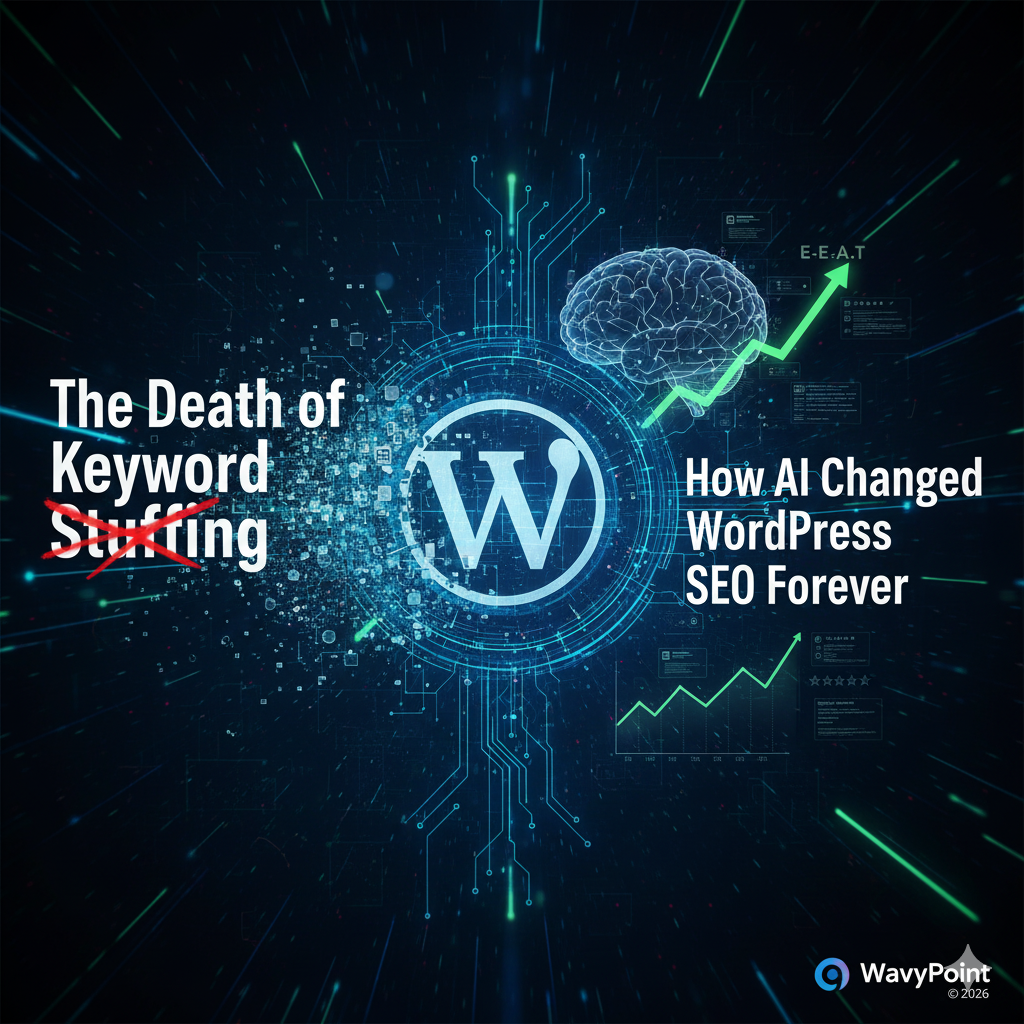
Remember the days when ranking on Google meant repeating your target keyword five times in the first paragraph? Those days are gone. In 2026, search engines powered by large language models don't just "read" your content—they understand it.
For WordPress site owners, this shift is monumental. The old checklist-style SEO plugins that focus on keyword density are now obsolete. Today, winning at search means proving your Expertise, Authoritativeness, and Trustworthiness (E-E-A-T). Here’s how to adapt your strategy for the AI era.
1. From Keywords to "Topic Authority"
Google’s algorithms now prioritize complete coverage of a topic over individual pages optimized for single keywords.
The Old Way: Write five separate, thin articles targeting "best running shoes," "cheap running shoes," and "running shoes for beginners."
The New Way: Create a single, comprehensive "pillar page" about running shoes that answers every possible user question, linking out to more specific cluster content on your site.
Practical Tip: Before you write, analyze the top 10 results for your topic. What sub-questions are they answering? Your content needs to be better and more complete than all of them combined.
2. Structured Data is Your New Best Friend
If content is for humans, structured data (Schema) is for search engine bots. It’s the code that tells Google, "This is a product, it costs $99, and it has a 5-star rating."
Without correct Schema markup, you are forcing search engines to guess what your page is about. In 2026, this is a critical error that prevents you from getting rich snippets in search results.
“Pages with correct Schema markup see an average 30% higher click-through rate from SERPs.”
3. User Experience (UX) Is SEO
You can have the best content in the world, but if your WordPress site takes 4 seconds to load, or if your layout shifts wildly on mobile, Google will bury it. Core Web Vitals are no longer just "nice to have"—they are a fundamental ranking signal.
This means your SEO strategy must include:
Optimizing images automatically.
Minifying CSS and JavaScript.
Using a reliable hosting infrastructure